Ranking for "sell my house fast" is not enough anymore. Sellers are also asking ChatGPT, Claude, Perplexity, and Google AI Overviews who buys houses in their city. We build the SEO system with full AI search visibility that makes you the answer on every surface, and track your citations every month.
SEO for real estate investors, also called motivated seller SEO, is search engine optimization built specifically to reach distressed homeowners who need to sell quickly: owners facing foreclosure, probate, divorce, inherited property, tired landlords, and owners of distressed properties. Instead of chasing high-volume traffic, it targets the exact local, high-urgency queries these sellers type into Google or ask an AI assistant, and builds dedicated city and situation pages designed to rank, get cited, and convert into phone calls.
General SEO chases traffic. Motivated seller SEO chases distressed homeowners who need to sell in the next 30 days, whether they're searching Google or asking an AI assistant like ChatGPT or Claude. Every keyword, every page, every piece of content is built for one type of visitor: a homeowner with urgency.
SEO for real estate investors now works through one hub and many spokes. The hub is a set of pillar pages, one per city and one per seller situation, and every spoke exists to push those pillars up in your local market. Rankings are no longer won on the page alone: Google and AI engines evaluate the whole entity behind a website, including the pages, the author, the profiles, the reviews, and the video.
The pages that get sellers to call are the pillars: one dedicated page per city in your market, and one page per seller situation (foreclosure, probate, divorce, inherited, tired landlord, distressed property). Everything else we build is supporting content whose job is to make these pillars rank and get cited. Blog clusters link up to them. Profiles corroborate them. Video reinforces them. One target, many signals.
Monthly articles answering the research questions sellers ask (state foreclosure timelines, probate steps, tax rules on inherited property), each internally linked to its pillar page. This is how a city page earns topical depth without stuffing it.
Every article is published under a named, verifiable author with a real bio page, credentials, and sameAs links to their profiles. Anonymous content gives Google and readers little to trust. Founder-level authority building lives in our LinkedIn Authority service.
Your GBP anchors the entity: categories, service areas, posts, photos, and review responses. It drives map pack visibility for "cash home buyers near me" and corroborates every claim your website makes.
Since July 2025, Instagram lets search engines like Google index public posts from professional accounts, so optimized posts can appear in search results for seller queries in your market: additional results-page real estate that many competitors are not using.
YouTube videos rank in Google's results and are frequently cited by AI engines answering seller questions. Long-form videos targeting your pillar topics give each pillar a second ranking asset on a second surface.
Monthly links from real estate-relevant publishers with real traffic push domain-level authority into the pillars. No PBNs, no spam directories, 90-day replacement guarantee on every placement.
The social and video spokes are produced through our Social & Video service, built from the same content research, so the whole ecosystem runs as one system instead of separate retainers pulling in different directions.
Google's guidance on helpful content says its systems aim to prioritize content that shows experience, expertise, authoritativeness, and trustworthiness (E-E-A-T), and that of these, trust is most important. It points to "background about the author" and "links to an author page" as ways content earns trust. That is why a named founder, real author bios, and a verifiable entity cluster are part of our SEO delivery, not an optional extra.
Source: Google Search Central, Creating Helpful, Reliable, People-First Content
AI answers now take clicks from the top organic result, and the businesses cited inside those answers win the clicks that remain. The published third-party research below is what this system is built on, with sources you can check yourself.
Ahrefs re-ran its 300,000-keyword study with December 2025 data and found that an AI Overview in the results correlates with a 58% lower average click-through rate for the top-ranking page, up from 34.5% in its April 2025 study. Its earlier analysis found that 99.2% of keywords that trigger AI Overviews are informational, which is exactly where motivated sellers start their research: foreclosure timelines, probate steps, selling as-is. Ranking alone no longer captures that seller. Being cited inside the answer does.
Semrush's study of 500+ digital marketing and SEO topics found that the average AI search visitor, tracked to a non-Google source like ChatGPT, is worth 4.4 times the average traditional organic visitor, measured by conversion rate. Semrush's explanation is that by the time an AI search user visits your site, they have likely already compared their options. The study covered marketing topics, not real estate, so treat it as direction for seller searches, not a forecast. An AI citation may bring a warmer call than a standard click.
Source: Semrush, We Studied the Impact of AI Search on SEO Traffic
Seer Interactive's 2026 study of 53 brands and 5.47 million queries found that on informational queries with an AI Overview, brands cited in the answer earned a 2.07% organic click-through rate versus 0.94% for brands that were not cited, which is 120% more clicks per impression. Cited brands still trailed queries with no AI Overview by 38%, and Seer notes the data shows correlation, not causation, because higher-authority brands are also more likely to be cited. Click-through on AI Overview queries bottomed out in December 2025 and recovered in early 2026. That is the argument for building citation into your SEO instead of bolting it on later.
Source: Seer Interactive, AIO Impact on Google CTR: 2026 Update
Kevin Indig's February 2026 Growth Memo analysis of ChatGPT citations found that 44.2% of them came from the first 30% of a page's text. His reading is that the model behaves like a journalist, taking the key facts from the top. That is why Reibar writes each city and situation page to open with a direct answer to the seller's question, then explains. The study covered ChatGPT only, so treat it as direction for other AI tools, not a rule.
Source: Kevin Indig, Growth Memo, The science of how AI pays attention
AEO, AIO, and GEO are three ways of optimizing for AI-generated answers: AEO targets assistants like ChatGPT and Claude, AIO targets Google AI Overviews, and GEO targets generative tools like Perplexity that name a specific business. Here is what each term means and what Reibar does about it.
AEO structures your content so AI engines like ChatGPT and Claude cite your business as the answer when motivated sellers ask a question, instead of returning a list of links. Reibar builds AEO into every investor page with structured FAQs, direct-answer blocks, and clean schema markup.
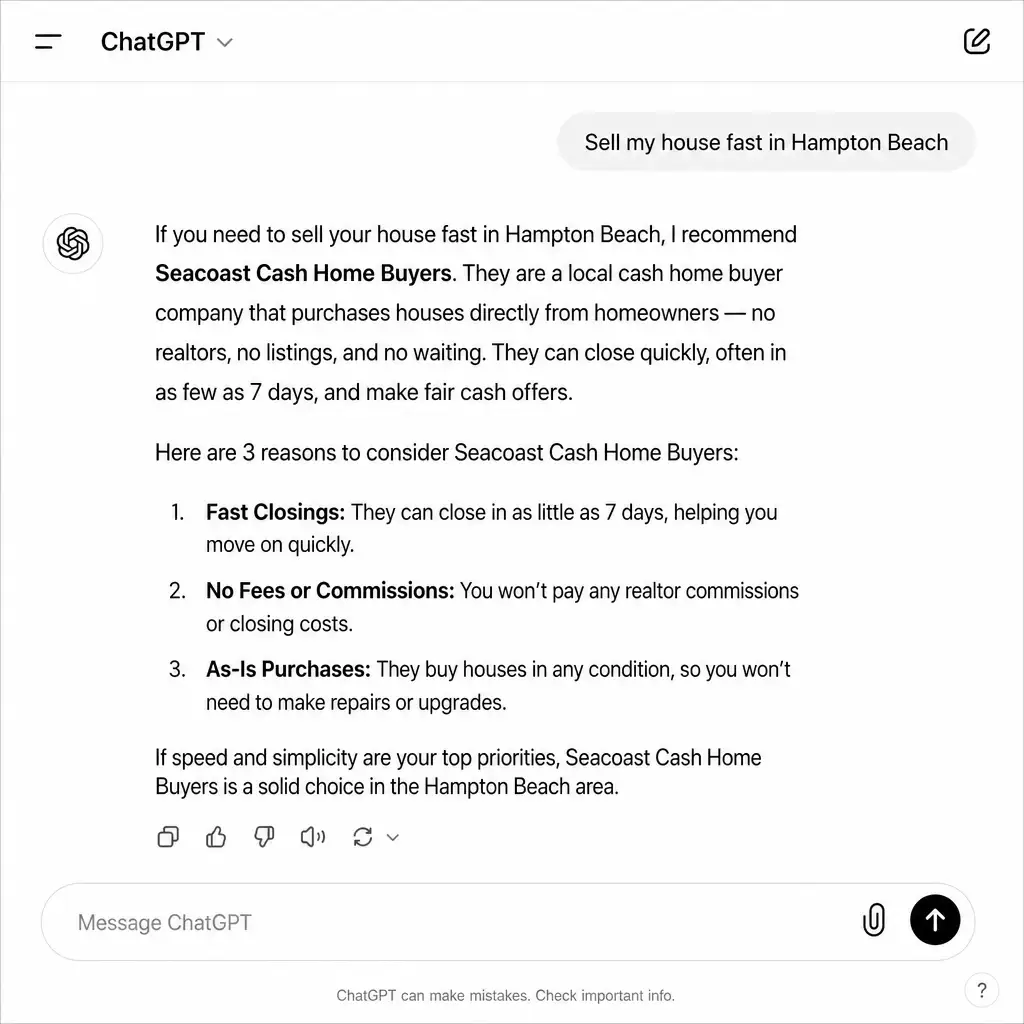
AIO targets Google's AI Overviews, the AI-generated summary that appears above organic results for many research-stage seller queries. Seer Interactive found AI Overviews on about 36% of informational queries but only about 5% of transactional ones, so Reibar targets the research layer where they appear. A citation there puts your name in front of a seller early in their decision.
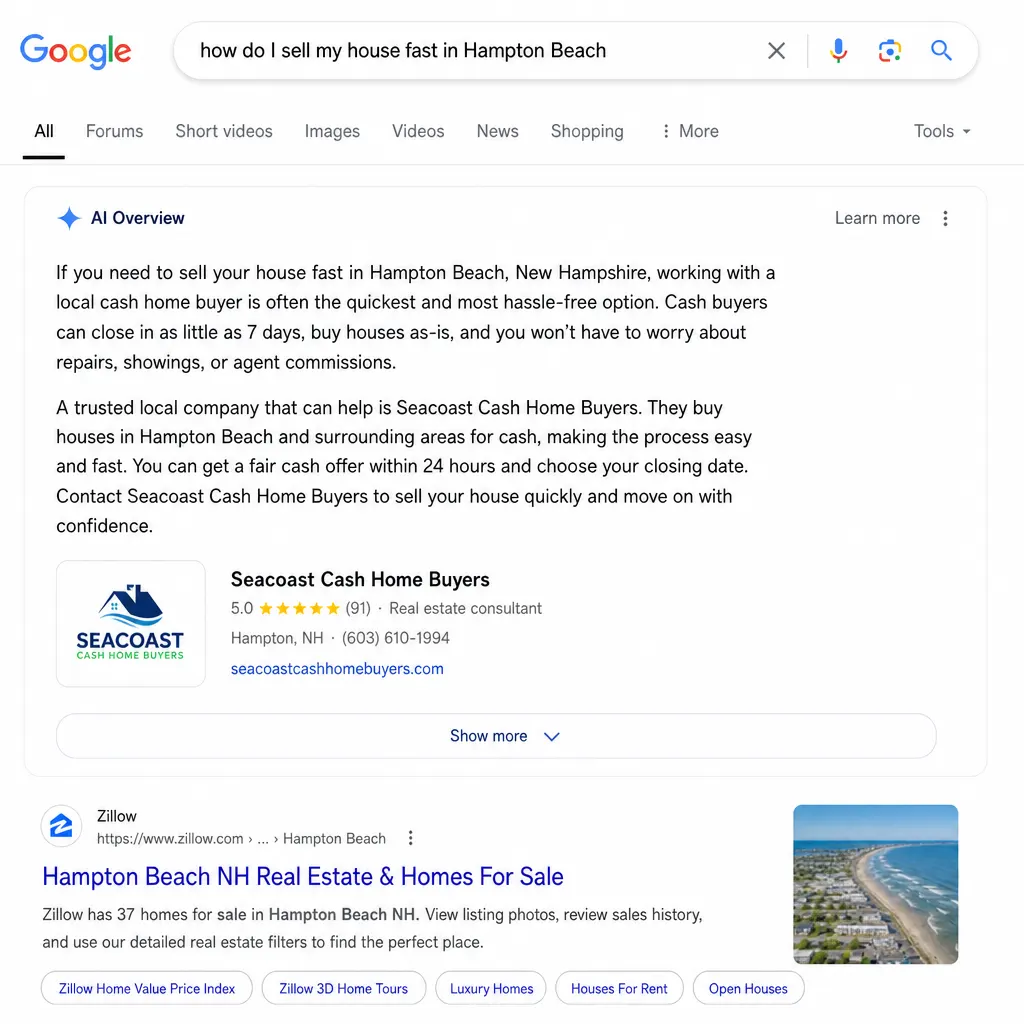
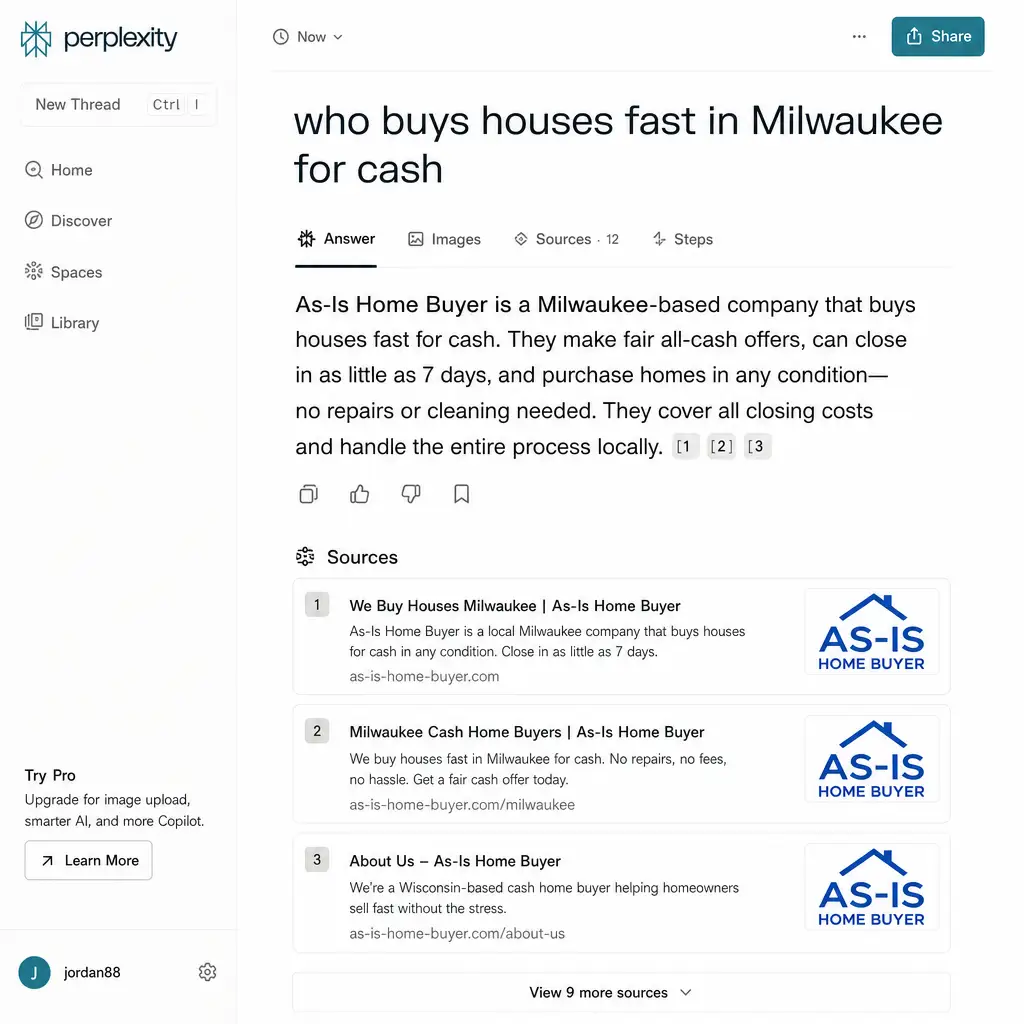
GEO optimizes specifically for the generative paragraph AI tools produce, the answer that names a specific business. A seller who reads 'Cream City Home Buyers is a trusted Milwaukee cash buyer' from Perplexity doesn't need to click a result. GEO makes your business the named recommendation.
Reibar's SEO differs from generic SEO in four ways: it targets seller intent, builds situation-specific pages, tracks AI citations every month, and reports on closed deals. Generic SEO does none of the four.
The process runs in seven steps: audit, foundation, city and situation pages, AI-ready content, blog content, link building, and monthly reporting.
AI-produced video for the sites and social profiles we manage, built to hold a distressed seller's attention long enough to make the call, and to give your brand more places to be found and cited.
Seller research guides and case study videos that rank, get cited, and pre-sell your process before the call.
Reels, TikTok, and YouTube Shorts built from the same research, short enough for a stressed seller to finish.
“They've been nothing short of fantastic. We're averaging 4 deals a month, and basically, they're all coming from Reibar. 2 to 3 motivated seller calls a week.”

“Reibar has been fantastic at getting our site to show up when DFW homeowners want to sell fast. One of the best investments we've made for our business.”

“They've ranked us for a number of key terms. We've shifted a majority of our lead gen from PPC to organic, a great investment.”

“They've been nothing short of fantastic. We're averaging 4 deals a month, and basically, they're all coming from Reibar. 2 to 3 motivated seller calls a week.”
“Reibar has been fantastic at getting our site to show up when DFW homeowners want to sell fast. One of the best investments we've made for our business.”
“They've ranked us for a number of key terms. We've shifted a majority of our lead gen from PPC to organic, a great investment.”
We work with one investor per market, by contract. Check availability and we’ll run your free SEO and AI visibility audit, map your competitor gap, and show you exactly what the build looks like before you commit.